How to Design a School Food Technology Classroom: Layout, Safety & Design
Updated: Jun 16

Food technology classrooms have become increasingly important within UK schools, helping pupils develop practical cooking skills, nutritional awareness and confidence around food preparation. However, designing an effective food technology room involves far more than fitting ovens and worktops.
Unlike standard classrooms, specialist practical spaces must balance teaching requirements, hygiene, safety, storage, ventilation and equipment while remaining adaptable to changing curriculums and future teaching methods.
Poor planning can lead to overcrowding, difficult supervision, insufficient storage and costly refurbishment work later. Well-designed food technology rooms, by contrast, support safer practical learning, improve lesson delivery and create environments that remain effective for years.
Guidance from CLEAPSS and Department for Education (DfE) building bulletins highlights the importance of planning specialist teaching environments around safety, compliance and functionality. Schools considering upgrades often integrate school refurbishment projects with wider improvements to practical learning spaces.
Table of Contents
Why Food Technology Rooms Matter in Modern Schools
Modern food education goes beyond basic cooking skills. A well-designed food tech room can support:
GCSE Food Preparation & Nutrition delivery
Healthy eating awareness
Hospitality and catering pathways
Practical life skills
Independent learning
Collaboration and group work
Confidence using specialist equipment
As schools place increasing value on practical subjects, specialist learning environments need to support both curriculum requirements and safe, hands-on experiences.
The Department for Education highlights the need for adequate specialist accommodation and room planning across educational settings through Department for Education area guidelines.
Schools investing in education fit out services may find specialist spaces require very different planning compared with standard classrooms.
Planning the Layout: Designing an Effective Food Technology Room
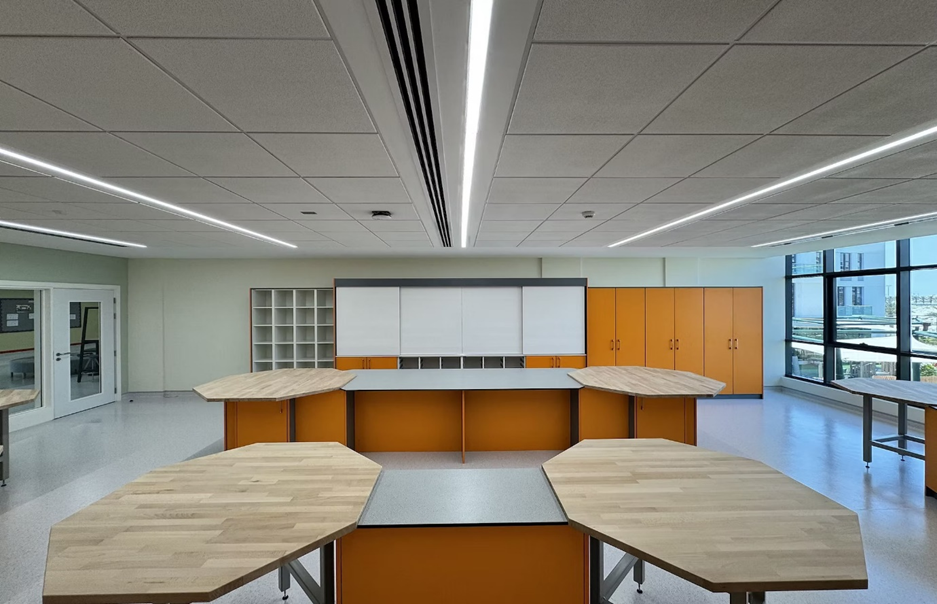
The success of any food technology room design begins with careful layout planning. Unlike standard classrooms, food technology spaces must accommodate practical activities involving heat, sharp utensils, food preparation and cleaning processes, while still allowing teachers to supervise pupils effectively.
Guidance from CLEAPSS and Department for Education building bulletins highlights the importance of designing specialist learning environments around workflow, safety and usability rather than simply fitting equipment into available space. Well-planned food technology rooms can improve lesson delivery, support safer practical learning and create environments that remain functional as curriculum requirements evolve.
Effective layouts typically separate key activities into dedicated zones for cooking, preparation, cleaning, storage and demonstration teaching. Creating distinct areas helps minimise congestion, reduce contamination risks and improve organisation throughout practical lessons.

Cooking Areas
Cooking zones form the centre of most food technology rooms, typically housing ovens, hobs and specialist appliances used during practical lessons. These areas should be designed to allow safe circulation around hot equipment while maintaining clear teacher visibility across workstations.
CLEAPSS guidance highlights the importance of adequate spacing between cooking stations to support supervision and reduce risks associated with burns, collisions and overcrowding. Early consideration should also be given to emergency shut-off controls, appliance positioning and movement routes to ensure cooking areas remain safe, practical and efficient during lessons.
Preparation Areas
Preparation spaces support much of the practical work carried out within a food technology room, including measuring ingredients, chopping, mixing and assembling dishes before cooking begins. Because these areas experience frequent use, work surfaces should be durable, hygienic and large enough to accommodate multiple pupils comfortably.
Well-designed preparation zones help improve lesson flow, reduce disruption between activities and encourage safer food handling practices, while sufficient workspace can also increase pupil confidence and independence during practical sessions.
Cleaning and Washing Areas
Dedicated cleaning zones are essential for maintaining hygiene standards within a food tech room and supporting safe food handling practices. These spaces often include handwashing facilities, dishwashing areas and access to cleaning equipment, helping manage both classroom maintenance and practical teaching requirements.
Separating cleaning functions from cooking and preparation areas can reduce cross-contamination risks while improving workflow during lessons, particularly in larger classrooms where multiple groups may need simultaneous access to washing facilities.
Storage Areas
Storage is frequently underestimated during food technology room design, despite having a significant impact on safety, organisation and everyday usability. Practical teaching environments often require separate storage for ingredients, refrigeration, equipment, cleaning products and student work, all of which must remain accessible without reducing circulation space.
Insufficient storage can create cluttered environments that become harder to supervise, whereas integrated school storage solutions help maximise available space, improve organisation and support changing curriculum requirements over time.

Demonstration Teaching Areas
Demonstration areas provide teachers with a dedicated space to introduce techniques, explain processes and model practical tasks before pupils begin independent work. Positioning these zones where all students can clearly observe instructions helps improve understanding, reduce disruption and increase confidence when moving into practical activities.
In larger food technology rooms, demonstration spaces may also support collaborative teaching approaches, group learning and more flexible lesson delivery.
Designing for Safety: CLEAPSS Guidance and Compliance Considerations
Safety should influence every aspect of food technology room planning.
CLEAPSS guidance supports schools with practical recommendations covering safe teaching, room layouts and risk management.
Important Safety Considerations in Food Technology Room Design
Safety should influence every stage of food technology room design, from initial layout planning through to equipment placement and storage. Guidance from CLEAPSS highlights that practical teaching environments function most effectively when supervision, movement and risk reduction are considered alongside teaching requirements rather than added afterwards.
Adequate Circulation Space
Students working in food technology environments often move between stations while carrying hot pans, sharp utensils or ingredients. Unlike standard classrooms, these spaces require wider circulation routes that allow pupils and staff to move safely without creating congestion around workstations.
Insufficient movement space can increase the likelihood of accidents, including trips, burns, spills and collisions between pupils. Well-planned layouts help maintain safer workflows while supporting more effective supervision during practical activities.
Teacher Visibility and Supervision
Clear sightlines across all workstations are essential within a food technology room. Teachers should be able to monitor cooking stations, preparation areas and cleaning zones simultaneously, helping identify unsafe behaviour or potential risks before incidents occur.
Good visibility not only improves safety but can also support lesson delivery by making demonstrations easier to follow and allowing staff to provide guidance more efficiently during practical sessions.
Emergency Controls and Accessible Safety Measures
Specialist teaching spaces should include clearly accessible emergency systems that allow staff to respond quickly when needed. This may include gas isolation controls, electrical shut-off points and established emergency procedures integrated into room planning.
Positioning safety controls where they can be reached quickly without obstructing circulation routes is an important consideration during refurbishment or new-build projects.
Fire Safety Planning
Because food technology classrooms involve heat-producing appliances, fire safety should form part of the earliest design discussions. Practical environments commonly require fire blankets, extinguishers, heat detection systems and clearly marked evacuation routes.
Effective fire safety planning goes beyond installing equipment; layouts should also help minimise risks associated with overcrowding around cooking stations and ensure escape routes remain accessible throughout lessons.
Reducing Cross-Contamination Risks
Food technology spaces should be designed to support hygienic working practices by separating activities that could increase contamination risks. Layout planning often considers the movement and storage of raw ingredients, cooked food, waste materials and cleaning products to help maintain safer food handling procedures.
Creating clear distinctions between preparation, cooking and cleaning areas can improve hygiene standards while supporting more organised workflows during practical teaching.
Schools developing future-ready learning environments increasingly integrate safety and compliance considerations from the earliest planning stages rather than addressing them retrospectively after installation.
Choosing Durable, Hygienic Materials for Long-Term Use

Daily practical activities place significant demands on materials within a food tech room, making durability and hygiene important considerations during the design stage. Unlike standard classrooms, food technology environments are exposed to heat, moisture, cleaning products, spills and frequent use, all of which can affect long-term performance if unsuitable materials are selected.
Worktops
Preferred surfaces are:
Heat resistant
Easy to sanitise
Non-porous
Resistant to staining
Flooring
Flooring should ideally be:
Slip resistant
Durable
Easy to clean
Resistant to moisture
Cabinetry & Finishes
Storage and fitted furniture should withstand:
Cleaning products
Frequent use
Moisture
Impact
Schools investing in bespoke educational furniture often prioritise durability to reduce replacement costs over time. Brookhouse manufactures fitted educational furniture designed specifically for demanding environments.
Ventilation, Heat Management and Air Quality
Ventilation significantly affects comfort and safety within food technology rooms.
Multiple ovens operating simultaneously can increase heat levels rapidly.
Effective planning may include:
Mechanical extraction
Airflow management
Heat control systems
Natural ventilation
Poor ventilation can affect concentration, comfort and teaching effectiveness. Retrofitting extraction systems later frequently increases refurbishment costs. Schools can explore DfE accommodation guidance for specialist teaching spaces.
Furniture, Appliances and Storage Requirements
Furniture selection has a direct impact on how effectively a food technology room functions day to day. Beyond appearance, workstations and fitted furniture should support accessibility, durability and practical teaching requirements while remaining suitable for different age groups and learning needs.
Adjustable Workstations
Adjustable workstations and inclusive layouts can help ensure specialist classrooms accommodate a wider range of pupils comfortably, while thoughtful positioning of appliances improves supervision and workflow during practical activities. Integrated equipment such as ovens, hobs, refrigeration units and dishwashing facilities should be planned around how pupils move through preparation, cooking and cleaning stages rather than installed in isolation.
Integrated Appliances
Ovens
Refrigeration
Dishwashers
Hobs
Accessible Layouts
Inclusive design helps ensure food technology rooms remain practical and safe for a wider range of pupils with different physical abilities, learning needs and levels of confidence during practical activities. Factors such as workstation height, circulation space, appliance positioning and ease of movement can all influence accessibility. Planning for inclusivity from the outset helps schools create specialist environments that support participation, independence and effective learning for all students.
Specialist Storage
Storage plays an important role in the long-term functionality and safety of a food technology room. Practical teaching environments often require organised space for ingredients, equipment, cleaning materials, small appliances and student work, all while maintaining clear circulation routes and reducing clutter. Poor storage planning can affect supervision, restrict movement and make classrooms more difficult to manage during practical sessions.
Designing Flexible Food Technology Rooms for Future Teaching Needs
Teaching approaches continue evolving. Modern food technology room design increasingly prioritises flexibility.

Adaptable spaces may support:
Group learning
Demonstration teaching
ICT integration
Independent work
Curriculum changes
Future expansion
Flexible planning can reduce future refurbishment costs and improve long-term usability.
Schools considering wider specialist upgrades often combine practical rooms with school laboratory solutions, design & technology classrooms, and other learning environments.
How Much Space Does a Food Technology Room Need?
Room size has a direct impact on both safety and functionality within a food technology room. Unlike standard classrooms, specialist practical spaces must accommodate cooking equipment, preparation areas, storage, circulation routes and cleaning facilities while still allowing teachers to supervise pupils effectively.
Insufficient space can influence:
Teacher supervision
Movement
Accessibility
Equipment placement
Storage
Schools should consider:
Expected class sizes
Circulation requirements
Appliance numbers
Accessibility standards
Planning around realistic student numbers helps create safer practical teaching spaces.
How Brookhouse Designs and Builds Specialist Food Technology Rooms
Designing an effective food technology room means balancing practical learning, safety, supervision, storage and long-term durability within one environment. Schools also need spaces that remain flexible as teaching requirements and curriculum needs evolve.

Brookhouse supports schools through the design, manufacture and delivery of specialist teaching spaces, including school food technology rooms, science laboratories and wider practical learning environments. Projects are planned around how spaces will be used day to day, with consideration given to circulation, storage, accessibility, compliance and future adaptability.
Every project follows a structured approach, beginning with consultation and site surveys before progressing through design, manufacture and installation. Using tools such as Autodesk Revit 3D modelling, schools can visualise layouts early, helping reduce disruption and avoid costly redesigns later in the process.
Brookhouse manufactures specialist educational furniture and integrated storage solutions in-house, allowing greater control over quality, consistency and long-term performance. Support continues beyond installation through aftercare and ongoing guidance, helping schools protect investment and maintain practical learning environments over time.
This end-to-end approach combines education sector experience with specialist manufacturing expertise, creating food technology rooms designed around both teaching requirements and long-term use.


Comments