CLEAPSS and School Learning Spaces: A Guide for Planning Projects
Updated: Dec 11, 2025
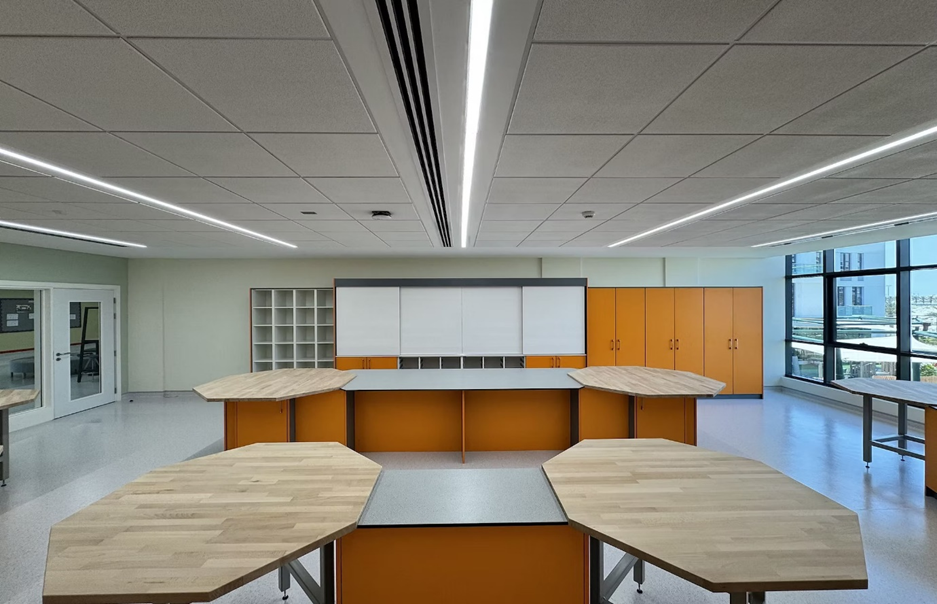
As more schools and multi-academy trusts invest in modernising their science laboratories, D&T workshops and food technology rooms, one question consistently shapes early planning conversations:
Table of Contents
How does CLEAPSS impact the design, refurbishment and safe use of these spaces?
CLEAPSS plays a key role in shaping safe, effective practical learning environments across the UK. While it does not issue certification, its guidance is widely regarded as the most reliable reference for safe practical work in science, design & technology and food education.
For leaders responsible for capital investment - including Heads of Science, Heads of D&T, Senior Leadership Teams, Estates Teams and Business Managers - understanding how CLEAPSS relates to classroom design ensures spaces are safe, compliant and capable of supporting hands-on teaching for years to come.
This guide explains what CLEAPSS is, why it matters, and how it influences the design of science labs, D&T workshops and food technology spaces. Where deeper technical detail is needed, you’ll find links to supporting pages such as A Practical Guide to CLEAPSS School Laboratory Design.
What Is CLEAPSS?
CLEAPSS is a UK organisation that provides health and safety guidance, resources and training to support practical learning in schools.

.
CLEAPSS supports teaching and safe practice across:
CLEAPSS does not inspect or approve schools. Instead, it provides practical support including:
Model risk assessments
Hazcards and Student Safety Sheets
Equipment and process guidance
Design and layout considerations
Training and CPD for staff
A technical helpline for schools and technicians
Because its guidance is widely adopted and evidence-based, CLEAPSS is recognised as a trusted benchmark by organisations such as the Health and Safety Executive (HSE), Ofsted, the Department for Education (DfE) and the Association for Science Education (ASE).
Why CLEAPSS Matters to UK Schools
CLEAPSS sits at the intersection of education, compliance and building design.
Supporting UK Health & Safety Requirements
CLEAPSS helps schools meet the expectations of key UK legislation including:
The Health and Safety Executive endorses CLEAPSS as appropriate support for safe school practice
Supporting a Practical-Rich Curriculum
CLEAPSS enables staff to run a wider range of safe, hands-on activities - which aligns with curriculum intent and expectations reflected in Ofsted’s approach to subject knowledge and practical delivery.
Avoiding Expensive Design Errors
When new labs, workshops or food rooms are planned without CLEAPSS in mind, mistakes happen - often costly ones. Common issues include:
Insufficient circulation space
Poorly located gas, electrical or water services
Fume cupboards installed where airflow or access is unsuitable
Machinery or ovens placed without safe work or supervision zones
Finishes chosen that degrade under chemicals or heat
Integrating CLEAPSS early prevents unnecessary redesigns and ensures the finished space works safely and efficiently.
CLEAPSS and Science Laboratories

CLEAPSS guidance influences almost every element of a modern school science laboratory, from how a space is planned to how it is used and maintained. It shapes decisions around:
Bench configuration and circulation spacing
Gas, water and electrical service placement
Ventilation strategy and fume cupboard suitability
Chemical storage, including separation and ventilation requirements
Equipment specifications and maintenance cycles
Safety equipment positioning, including eyewash points and emergency shut-offs
For schools planning a refurbishment or new build, interpreting this guidance early helps avoid costly redesigns later in the process. Many schools explore our Science Laboratory Design and Refurbishment services alongside CLEAPSS guidance when developing a project brief.
A full breakdown is available in A Practical Guide to CLEAPSS School Laboratory Design.
CLEAPSS and D&T Workshops

CLEAPSS also provides guidance for Design & Technology spaces, covering disciplines such as resistant materials, engineering, product design, textiles and electronics. This aligns closely with BS 4163:2021, the recognised standard for designing safe, practical
D&T teaching environments.
CLEAPSS helps inform decisions on:
Appropriate machinery spacing
Extraction and dust-control provision
Guarding requirements and machine selection
Layouts that maintain safe supervision lines
PPE expectations, signage, and inspection schedules
Schools planning upgrades to their workshops often review CLEAPSS guidance while exploring solutions such as our Design & Technology Workshop Projects and Educational Furniture Manufacturing services to ensure safety aligns with curriculum priorities.
Related guidance can be found here: CLEAPSS D&T Workshop Design.
CLEAPSS and Food Technology Rooms

CLEAPSS supports safe food handling and teaching in school kitchens and food technology rooms. It aligns closely with DfE Building Bulletin 81, which provides guidance on designing safe, hygienic and workable food teaching environments.
CLEAPSS guidance addresses:
Workflow planning to prevent cross-contamination
Placement of ovens, cookers and sinks
Ventilation, hygiene and cleaning protocols
Suitable equipment and maintenance expectations
Schools planning to update or expand their food provision often refer to CLEAPSS alongside our Food Technology Classroom Design services to ensure the room supports both teaching needs and regulatory expectations.
Further guidance can be explored here: CLEAPSS Food Technology Room Design.
Practical Spaces Recognised Under CLEAPSS
Modern schools often require a wider range of practical rooms beyond standard workshops or laboratories. CLEAPSS and Building Bulletin 81 reference several specialist spaces, including:
Multi-materials / Resistant Materials Room
A versatile space for woodworking, metalwork and mixed-material project work, requiring durable finishes and appropriate extraction.
Control / Electronics / Systems & Graphics Room
Designed for CAD/CAM, electronics, robotics or theory-based design work with IT services and effective layout.
Textiles Room
A practical environment for sewing and fabric-based design, with suitable power distribution, layout and safe equipment spacing.
Shared Design / Resource Area
A flexible zone for design development, research, collaborative work or planning sessions.
Project Room
A dedicated space for extended practical projects, prototypes or portfolio-based work.
Seminar or Theory Room
A clean, non-practical teaching space used for instruction, planning and review.
External Project Area
An outdoor or semi-outdoor workspace used for large-scale builds, testing or environmental/design tasks.
Materials Preparation Room
A technician-led workspace for equipment setup, tool management or material processing.
Materials and Equipment Stores
Secure, clearly organised storage for consumables, equipment and tools — supporting safe access and efficient teaching.
When Brookhouse develops full practical learning suites, these specialist rooms are planned together so the department functions as a cohesive, safe and future-ready system.
Related UK Authorities and Reference Organisations
The following official organisations support or recognise CLEAPSS guidance as good practice:
Department for Education (DFE Building Bulletins)
Association for Science Education (ASE)
These references help schools demonstrate due diligence, especially during audits, capital investment planning or post-incident review.
How Brookhouse Applies CLEAPSS in School Projects
At Brookhouse, CLEAPSS guidance is incorporated from the earliest planning stages - not retrofitted. We use CLEAPSS principles when designing or refurbishing:

Our approach:
Reviewing CLEAPSS guidance relevant to the space type
Designing layouts that support supervision and safe practice
Specifying appropriate finishes, equipment and storage
Ensuring flexibility for curriculum and technology changes
Our goal is to deliver spaces that are safe, future-proof and practical for real teaching - not just compliant on paper.
CLEAPSS is a vital reference point for schools delivering practical subjects. While it does not certify facilities, its guidance helps schools ensure their labs, workshops and food rooms are safe, functional and aligned with best practice.
For support applying CLEAPSS in upcoming upgrades or new builds, you can explore:
Science Laboratory Design Using CLEAPSS


Comments