More Than a Mood: How School Design Can Support Mental Health and Wellbeing
- Rob Main
- Sep 22, 2025
- 3 min read
According to NHS Digital, 1 in 5 children aged 7 to 16 now has a probable mental health disorder in the UK.
Mental Health Is Now a Core Responsibility in Education
In 2025, mental health isn’t a fringe topic in schools, it’s front and centre. With nearly 20% of students aged 7–16 facing likely mental health disorders, school leaders are being asked to go beyond curriculum and care: to create environments that actively support school design wellbeing.
But mental health support doesn’t start (or end) in the counsellor’s office. It’s in the layout of classrooms, the lighting in corridors, the privacy of washrooms, and the comfort of staff rooms. It’s in the design of the space itself.
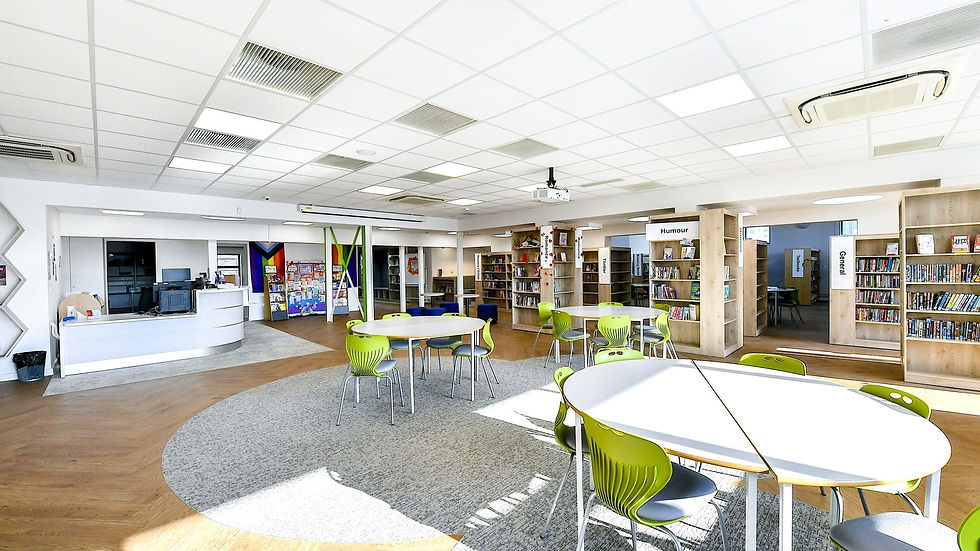
The Design Wellbeing Link Is Real
Research from the University of Salford has shown that the physical characteristics of learning environments such as layout, light, air quality and colour, can account for up to a 16% improvement or deterioration in student learning progress.
But it’s more than just attainment. Design impacts:
Anxiety and focus
Social behaviour and peer interaction
Emotional regulation
Staff morale and energy
The right environment can uplift. The wrong one can overwhelm.
What Does a Mental Health-Friendly School Look Like?
Creating emotionally intelligent spaces isn’t about luxury, it’s about meeting students where they are and giving them what they need to feel safe, calm and supported.
Here’s what good design looks like in practice:
Soft zoning in classrooms for quiet reflection or SEN support
Biophilic design—bringing nature indoors with calming colours and textures
Natural light and proper ventilation to reduce fatigue and boost concentration
Acoustic treatments to prevent overstimulation, especially for neurodiverse students
Inclusive, secure washrooms that respect dignity and privacy
Well-equipped staffrooms where teachers can reset and recharge
This kind of design speaks directly to the emotional and psychological wellbeing of students and staff.
Wellbeing Isn’t One-Size-Fits-All
The best mental health design strategies are tailored to the people in the building. A mainstream secondary school will have different pressures than a SEND provision unit or a primary academy. Schools must balance safeguarding, supervision and personal space, and refurbishment offers the perfect chance to get it right.
By working with a partner who understands these nuances, schools can future-proof their environments and reduce reliance on reactive interventions.
Brookhouse: Designing for Human Needs, Not Just Space
At Brookhouse, we don’t just design for capacity, we design for people. Our approach is rooted in empathy, collaboration, and user-centred thinking.
We work closely with SLTs, SENCOs and architects to understand student needs
We bring biophilic, sensory-friendly and ergonomic design principles into every space
We offer modular and bespoke furniture that can flex to changing wellbeing strategies
Our designs support Ofsted priorities around behaviour, safety and inclusion
From classroom refurbishments to calming breakout zones and rejuvenated staff spaces, we create environments that support both teaching and feeling.
Final Thought In a world where students face increasing pressure and uncertainty, school should feel like a safe, uplifting and supportive space. It should be a place that encourages resilience, joy, and growth.
Let Brookhouse help you design for wellbeing because when students feel better, they learn better.
Ready to put your funding to work?
Get in touch with Brookhouse on 0345 383 0050, or email us on inspire@brookhouseuk.com
Let’s design a space that enables success.


During my search for similar resources, I found https://proshtuchnyiintelekt.com/, which also takes a straightforward and reader-friendly approach